
Before you buy
How to choose a building plot in Tbilisi
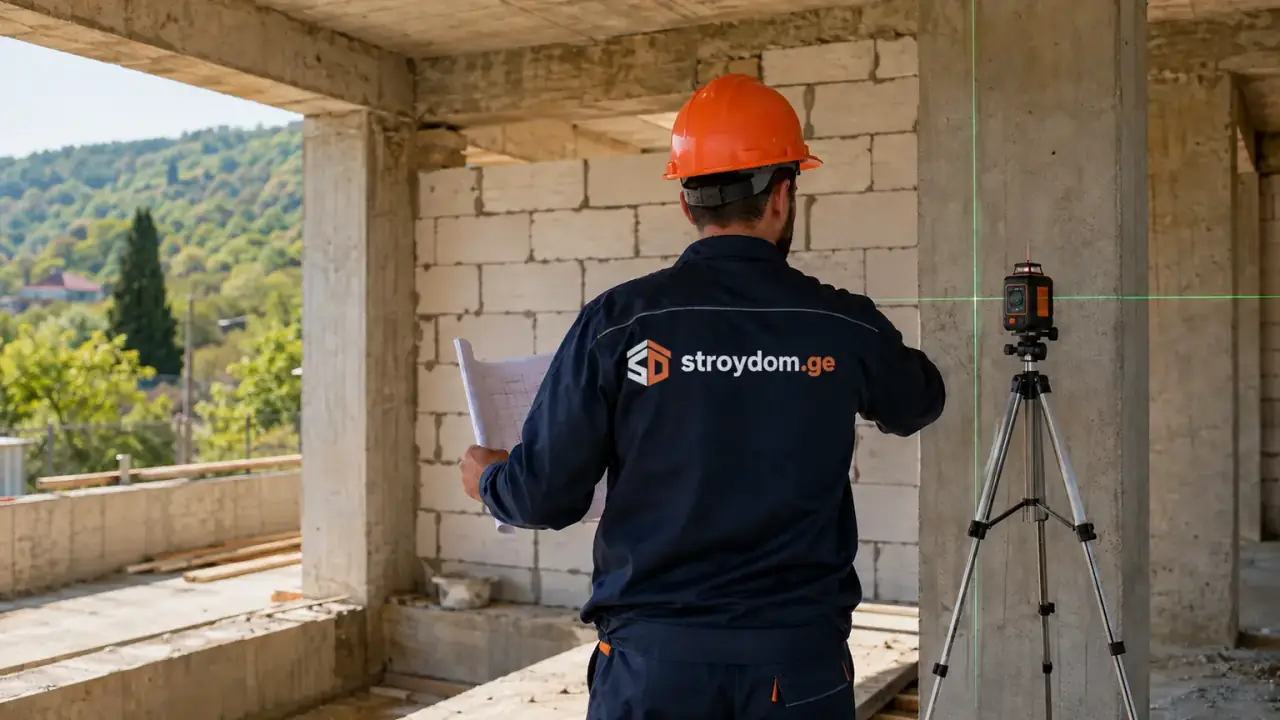
stroydom.ge checks building plots in Tbilisi before you pay a deposit. A legal check against the Public Registry costs 300–800 GEL, a planning certificate 400–900 GEL, a technical assessment with an engineer on site 400–900 GEL, a geotechnical survey 1,500–3,500 GEL per site, a topographic survey 600–1,500 GEL, a utility connection assessment 300–700 GEL. A full plot audit as a package costs 2,500–5,000 GEL: a verdict of build, don’t build or build with caveats, plus a groundworks cost estimate.
Most construction overruns are created not on site but on the day the land is bought. A plot cannot be redesigned: it comes with its geology, access, utilities and planning limits. We visit the site before the deal and tell you what can realistically be built there and what it will cost.
What should you check before paying a deposit?
These points take a day or two and cost a fraction of the mistake they prevent. Half of them the seller will not mention, not out of concealment but because they do not know.
Land category
Agricultural land does not allow a residential house and is unavailable to foreigners. Changing the category is not always possible and takes months. Verified from the registry extract before any money moves.
Encumbrances and boundaries
Mortgages, seizures, easements, boundary disputes with neighbours. Physical boundaries often differ from cadastral ones, and this surfaces when the points are set out on site.
Buildable footprint
Coverage ratio, setbacks, permitted number of storeys and height. A 600 m² plot does not mean you can build a 600 m² house on it.
Geology
Soil type and bearing depth determine the foundation, which is 8–35% of the budget. Collapsible or landslide-prone plots need solutions that can double the groundworks.
Utilities
Electricity at the required capacity, water, sewerage or space for a septic tank, gas. Not just availability but distance: 200 m to the connection point is a budget line of its own.
Machinery access
Whether a mixer, tipper or long-load truck can get through. In older districts this is solved with a manipulator and mini-machinery, at a premium.
What are the red flags on a building plot?
Signs where we advise against buying, or advise negotiating hard.
- Cracks in neighbours' retaining walls, leaning trees and fences: signs of ground movement
- Water standing on the plot after rain, or moisture-loving vegetation in a hollow: high groundwater
- Construction debris buried under a soil layer: made ground has to be replaced or piled through
- The only access runs across someone else's plot without a registered easement
- An unfinished or unpermitted neighbouring building right on the boundary: risk of disputes and approval limits
- The seller rushes you and refuses time for checks: this almost always means a problem they already know about
How do you budget a plot?
The price of the land is not the cost of entering the project. The real budget has four parts, and the last three are routinely underestimated.
Land price
Benchmark against actual transactions in the same block over recent months, not listings: the gap between asking and final price runs to 20–30%.
Site preparation
Demolition of old structures, clearing, debris removal, boundary setting out, levelling. From 5,000 to 40,000 GEL depending on condition.
Connections
Electricity at the needed capacity, water, sewerage. Away from networks: 8,000 to 30,000 GEL and up, plus lead times.
Groundworks
Driven by geology and terrain. On a flat stable plot, 8–12% of the house budget; on a slope, up to 35%.
How to check a plot before buying: the steps in order
Documents first, then the site, then the soil and utilities, all before the deposit. The engineer visit and the registry check take one to two days, geology with the laboratory adds one to two weeks; a full check fits into two to three weeks. The result is a conclusion: buildable, not buildable, or buildable with conditions.
1. Public Registry extract
Owner, land category, liens, arrests, easements and whether the boundaries match the cadastre. Foreigners cannot buy agricultural land. 300–800 GEL.
2. Zoning certificate
Build ratios K-1/K-2, maximum height and setbacks: how much house will actually fit on the plot. 400–900 GEL.
3. On-site technical assessment
Terrain, landslide and flooding signs, made ground, access for a concrete mixer and a dump truck. 400–900 GEL.
4. Geotechnical survey
Mandatory on a slope, in a hollow, on made ground or where movement is visible: the soil sets the foundation, and that is 8–35% of the budget. 1,500–3,500 GEL per site.
5. Topographic survey and boundaries
Needed for the design and to calculate earthworks; setting out the points on site shows whether the real boundaries match the cadastre. 600–1,500 GEL.
6. Utility connections
Actual distance to connection points, cost and timeline for water, electricity, gas, sewerage or a septic system. 300–700 GEL.
What does a plot check at stroydom.ge cost?
| Item | What is included and the price |
|---|---|
| Legal check | 300–800 GEL. Owner, encumbrances, liens, land category, boundary match with the cadastre, from the Public Registry extract. |
| Zoning certificate | 400–900 GEL. Build ratios (K-1/K-2), maximum height, setbacks: what can actually be built. |
| Engineer site visit | 400–900 GEL. Terrain, landslide and flooding signs, machinery access, checked by an engineer on site. |
| Geotechnical survey | 1,500–3,500 GEL per site depending on the number and depth of boreholes. Mandatory for slopes and plots showing settlement. |
| Topographic survey | 600–1,500 GEL. Needed for the design and to calculate earthworks volumes. |
| Utility connection assessment | 300–700 GEL. Actual distance to connection points, real cost and timeline for water, electricity, gas, sewerage or a septic system, established before you buy, not after. |
| Full plot audit | 2,500–5,000 GEL as a package: everything above plus a single conclusion (buildable / not buildable / buildable with conditions) with a groundworks cost estimate. |
Legal check
300–800 GEL. Owner, encumbrances, liens, land category, boundary match with the cadastre, from the Public Registry extract.
Zoning certificate
400–900 GEL. Build ratios (K-1/K-2), maximum height, setbacks: what can actually be built.
Engineer site visit
400–900 GEL. Terrain, landslide and flooding signs, machinery access, checked by an engineer on site.
Geotechnical survey
1,500–3,500 GEL per site depending on the number and depth of boreholes. Mandatory for slopes and plots showing settlement.
Topographic survey
600–1,500 GEL. Needed for the design and to calculate earthworks volumes.
Utility connection assessment
300–700 GEL. Actual distance to connection points, real cost and timeline for water, electricity, gas, sewerage or a septic system, established before you buy, not after.
Full plot audit
2,500–5,000 GEL as a package: everything above plus a single conclusion (buildable / not buildable / buildable with conditions) with a groundworks cost estimate.
Updated:

Choosing a plot?
Send the coordinates or a link to the listing, and we will look at the site and tell you what can be built there and what the groundworks will cost. If you build with us afterwards, the cost of the check is credited against the contract.
We will call within an hour, 24/7. You do not need drawings for the first conversation.
By submitting the form you agree to personal data processing. Privacy Policy
Frequently asked questions about choosing a plot
Can a foreigner buy a building plot in Georgia?
Non-residents buy residential development land on almost the same basis as locals. The main restriction is agricultural land, which foreigners cannot acquire. So the category is verified from the registry extract before a deposit is paid. A specialist lawyer handles the legal side; we handle the technical checks.
How much does a building plot in Tbilisi cost?
The spread is enormous: in Vake and upper Saburtalo the price per are can be five to ten times that of the suburbs. Benchmark against real transactions in the same block over recent months rather than listings: the gap between asking and final price is usually 20–30%.
What matters more: the view or flat ground?
It depends on the budget. A view almost always means a slope, and a slope means retaining walls, piles and drainage: 15–40% on top of the budget. If money is tight, a flat plot gives you more house for the same spend. If the view is essential, budget the groundworks upfront rather than discovering them later.
Is a geotechnical survey always necessary?
On a flat plot with understood soil and neighbouring buildings, an engineer's assessment may be enough. On a slope, in a hollow, on made ground or where movement is visible, a survey is essential: without it the foundation is either over-designed, which costs more than the survey, or under-designed, which is worse.
Can I build on a plot that already has a structure?
Yes, but budget the demolition and removal in advance, check whether the structure is listed as heritage, and confirm it does not conflict with the new footprint. Sometimes an old foundation can be reused, but more often removing it entirely is cheaper than adapting it.
How long does plot due diligence take?
The site visit and technical assessment take one to two days. Legal checks against the registry take about the same. Geology, if required, adds one to two weeks including the laboratory. A full check fits into two to three weeks, a sensible window that will not cost you a good plot.