Interior finishing
stroydom.ge delivers interior finishing in Tbilisi only as part of a house project. Machine plaster costs 22–32 ₾/m², hand plaster 28–40 ₾/m². Filling is 18–28 ₾/m², two coats of paint 12–20 ₾/m². A drywall partition is 55–85 ₾/m², a single-level ceiling 35–50 ₾/m². Laminate is 12–20 ₾/m², a door with architraves 220–380 ₾. A 60 m² flat finished throughout comes to 14,000–24,000 ₾ over 5–8 weeks. Advance no more than 15%, two-year warranty on finishes.
We deliver the full finishing package: plaster, drywall construction, filling for paint, painting, floor coverings, doors and ceilings. Finishing is the only stage a client judges with their own eyes, which makes preparation discipline decisive: what you see rests entirely on what you do not.
Only as part of a house project
We deliver this line of work only as part of a house project, when we build the house turnkey. We do not take it as a standalone order: a single warranty is only possible when one contractor answers for the whole chain of work.
About the work
How does stroydom.ge deliver interior finishing?
Interior finishing, from plaster on beacons to the final coat of paint and the last door hung.
What is included in interior finishing?
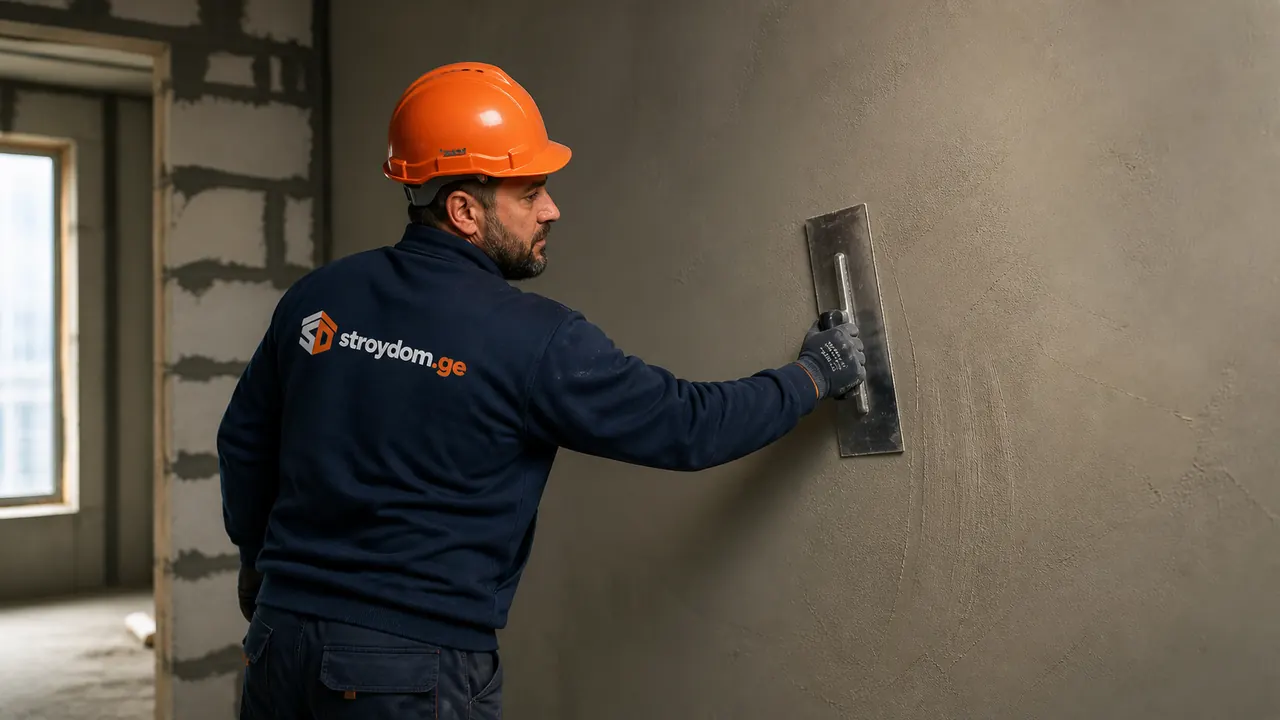
Plaster
Machine and hand plaster on beacons, held to 2 mm over 2 m.
Drywall
Partitions, niches, bulkheads and multi-level ceilings on Knauf systems with acoustic insulation.
Filling and painting
Filling to Q3/Q4, sanding, priming and two to three finish coats.
Floors and doors
Laminate, parquet, luxury vinyl, skirting, interior doors and architraves.
What is interior finishing and why is it needed?
Interior finishing is the final stage, where the aesthetics and the durability of every layer beneath it are settled. Some 80% of the quality is decided by what lies under the paint and the skirting: levelling to beacons, reinforcing mesh at junctions between different materials, primer of the right penetration, filling that is properly sanded out. Any saving here surfaces within a year as a crack above a door opening, a wave on the wall under raking light, or paint peeling in a bathroom.
Finishing is also the only stage a client can assess unaided, which is why the whole contractor is judged by it: nobody ever sees a perfectly poured foundation, while everyone sees a trowel mark in the hallway every day. Hence our approach: base first, finish second. We do not start filling until the plaster has gained strength, do not hang doors in a damp opening, do not paint above 70% humidity, and do not hand over work under overhead light.
Materials are chosen by the use of the room: moisture-resistant board, anti-fungal primers and paints with biocide protection in wet areas; high-abrasion paints in circulation zones; light-fast products on the sunny side, where ordinary enamel yellows within two Tbilisi summers.
What stages does interior finishing consist of?
Each stage runs only after the previous one is accepted — so hidden works are never "closed" before inspection, and a mistake never has to be hunted for through screed and plaster.
- 1
Survey and condition report
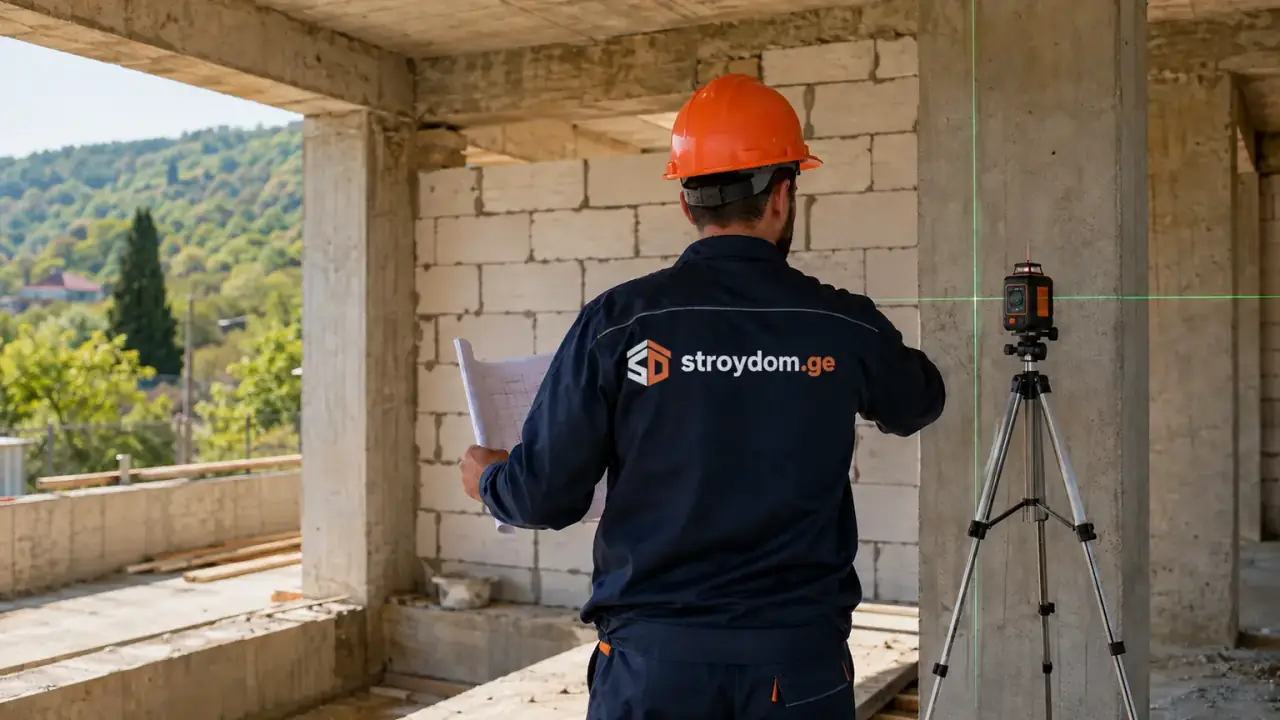
Laser survey of the planes, recording deviations, out-of-square corners and the state of the substrates. The result shows where to plaster and where lining is cheaper.
- 2
Substrate preparation
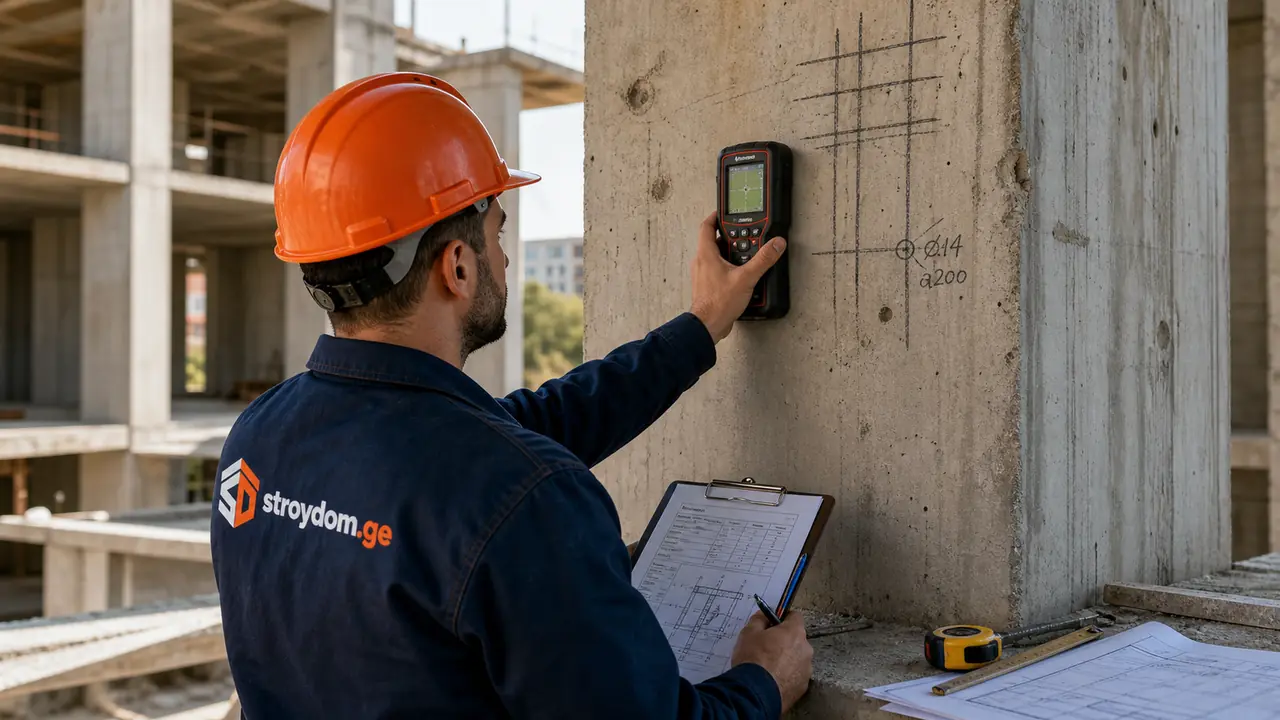
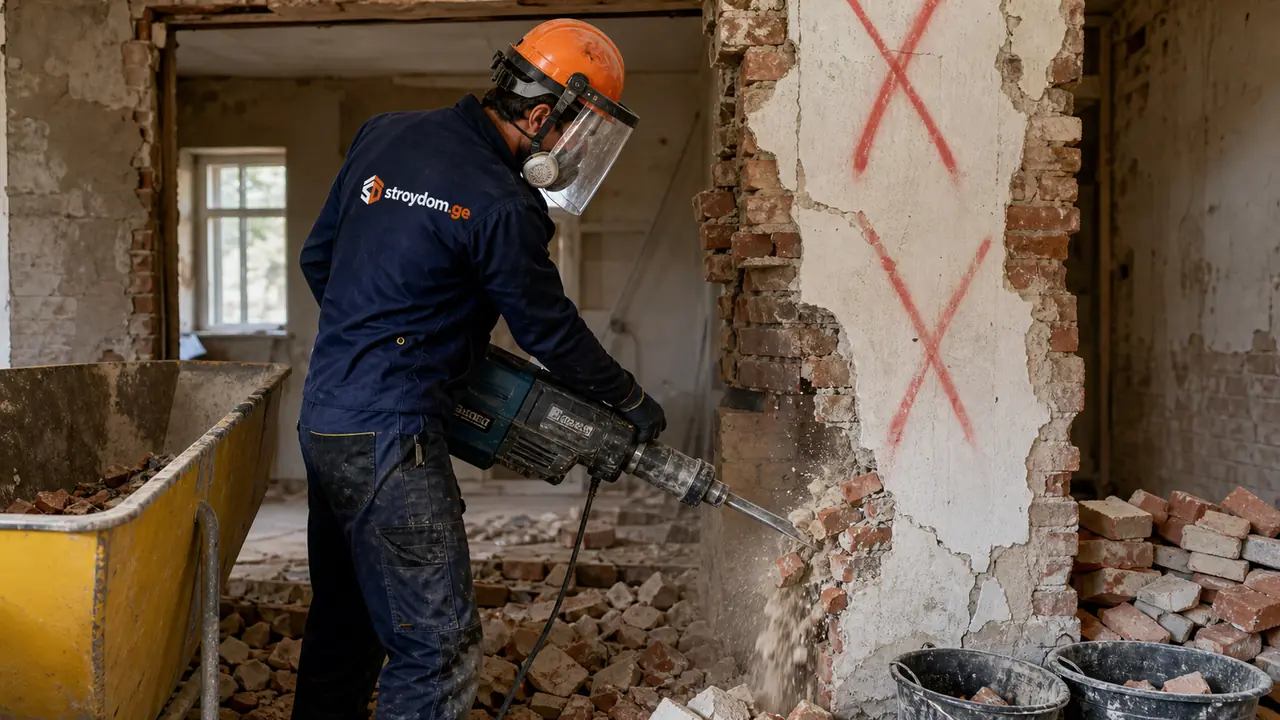
Removing old finishes, repairing cracks, dust extraction, priming, and reinforcing mesh at junctions of dissimilar materials, where the first crack always appears.
- 3
Plastering
Laser-set beacons, plaster 8–25 mm thick, corners run true, deviation held to 2 mm over 2 m.
- 4
Drywall construction
Knauf framing with stud spacing set by load, mineral wool insulation, standard or moisture-resistant board in wet areas, joints filled with reinforcing tape.
- 5
Filling for paint
Base and finish filling, sanding to Q3 or Q4 depending on lighting and finish type, dust removal, priming.
- 6
Floor preparation
Self-levelling compound where needed, substrate moisture check, underlay for laminate or parquet.
- 7
Final finishes
Two to three coats of paint, laying laminate, parquet or luxury vinyl, hanging doors, fitting architraves and skirting.
- 8
Cleaning and handover
Final clean, checking planes under raking light, testing doors and ironmongery, and a handover certificate listing the materials used.
How does stroydom.ge control quality on site?
How we work on site — materials, equipment, tolerances, documentation and acceptance of hidden works.
Plane control
Laser level and a 2 m straightedge: 1 mm over 2 m under paint, 2 mm over 2 m under wallpaper and tile.
Raking light
The finish is accepted under a floodlight set close to the wall from the side. It is the only way to see defects before the client does.
Site climate
Plastering and painting run at +10…+25 °C and up to 70% humidity, without draughts. Force-drying with heaters is prohibited because it causes cracking and delamination.
Cleanliness
Finished work is covered with film, floors with board, and waste is cleared daily. Sanding dust settled on fresh paint is a defect polishing will not fix.
Technological pauses
Screed up to 28 days, plaster 7–14 days, paint 4–6 hours between coats. The pauses are built into the schedule rather than sacrificed for a shorter contract date.
What should be accounted for in Tbilisi and Georgia?
What we account for here: seismic intensity 8 (MSK-64), hot summers and damp winters, steep terrain, older stock with timber floors and worn city networks.
High humidity
In bathrooms and kitchens: moisture-resistant board, anti-fungal primers and paints with biocide protection. Standard plasterboard in a shower area swells within a season.
Out-of-true walls in older stock
In Sololaki, Avlabari and Mtatsminda deviations reach 5–10 cm. Lining on a frame is cheaper and lighter than 8 cm of plaster, which also loads the floor.
Seismic movement and cracks
Junctions between different materials (masonry and concrete, board and plaster) always get reinforcing mesh and flexible filler. Under small movements it is the material joint that cracks.
Paint and sunlight
On south facades and in rooms with panoramic glazing we use light-fast paints: ordinary enamel fades and yellows within two summers.
Doors and settlement
Doors go in only after plaster and screed have fully dried. Fitted earlier, they stop closing within a month as the opening geometry changes.
Junctions between coverings
The transition between tile and laminate is calculated from the layer thicknesses back at the screed stage. Covering it with a threshold strip means the levels were never worked out in advance.
How much does it cost and how long does it take?
Indicative price ranges in lari (₾) for standard conditions. The final estimate is fixed after measurements and specification approval.
| Item | What is included and the price |
|---|---|
| Plaster | Machine applied: 22–32 ₾/m²; hand applied: 28–40 ₾/m². Corners and reveals are priced separately. |
| Filling and painting | Filling: 18–28 ₾/m² (Q4 costs 25–35% more); painting: 12–20 ₾/m² for two coats. |
| Drywall | Partition: 55–85 ₾/m²; single-level ceiling: 35–50 ₾/m²; multi-level from 70 ₾/m². |
| Floors and doors | Self-levelling layer: 15–25 ₾/m²; laminate: 12–20 ₾/m²; door with architraves: 220–380 ₾. |
| Flat, fully finished | 60 m² (walls, ceilings, floors, doors): 14,000–24,000 ₾ over 5–8 weeks including technological pauses. |
| Terms | Prices are fixed from the condition report after the survey. Advance no more than 15%, then payment per completed stage. Warranty on finishes 2 years. |
Updated:
Ready to estimate?
Leave a request — engineer site visit, measurement and a preliminary estimate for "interior finishing" are free.

Planning to build a house?
Start with a free consultation about your plot, floor area and budget. If you are still looking for land, tell us about a plot you are considering.
We will call within an hour, 24/7. You do not need drawings for the first conversation.
By submitting the form you agree to personal data processing. Privacy Policy
Frequently asked questions — Interior finishing
What are Q3 and Q4 levels, and which do I need?
They are surface quality classes for the finish. Q2 suits textured wallpaper, Q3 suits paint and smooth wallpaper under diffuse light, Q4 is for gloss paint, decorative plaster and walls lit at a grazing angle by a window or a light fitting. Q4 costs roughly 25–35% more than Q3 because it requires a continuous skim and sanding of the entire plane.
Why can walls not be painted straight after plastering?
Plaster needs 7–14 days to gain strength and dry; screed needs up to 28. Paint on a damp base gives patches, delamination and efflorescence, and a door fitted into a damp opening later jams. Technological pauses are the most common place a contractor saves time and the most common cause of rework.
Plaster the walls or line them with drywall?
It depends on the deviation. Up to 3 cm, plaster is cheaper and more robust: a solid wall you can fix anything to. From 5 cm plaster becomes expensive and heavy, and lining on a frame wins. It also creates a void for services and acoustic insulation. In Tbilisi’s older stock deviations of 5–10 cm are routine.
How do I check finishing quality at handover?
With a 2 m straightedge across the diagonals (tolerance under paint is 1 mm over 2 m) and a portable floodlight placed close to the wall at an acute angle. Raking light reveals every wave and trowel mark that overhead lighting hides. We hand work over that way rather than waiting for the client to do it with a phone torch.
Which paint do you use and why does it matter?
For living spaces, Tikkurila, Caparol and equivalents (matt and semi-matt, washable). Cheap paint differs not in colour but in coverage and abrasion resistance: it needs three or four coats, and after a year the mark of a damp cloth stays for good. Saving on paint soon means repainting.
How long does finishing a 60 m² flat take?
Five to eight weeks for the full package: plaster, drywall, filling, painting, floors, doors. About two of those weeks are technological pauses that cannot be shortened. A promise of "turnkey in a month" almost always means working on bases that have not dried.