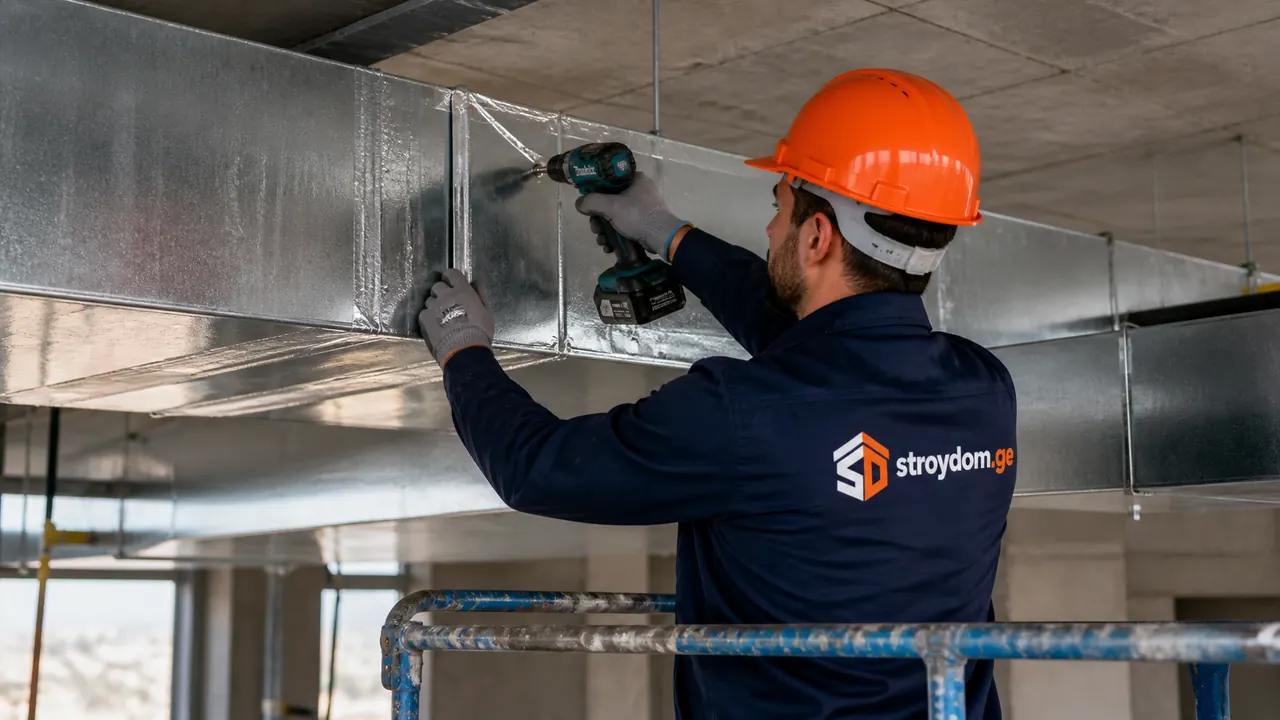
Ventilation and air conditioning
Ventilation and air conditioning from stroydom.ge is installed in apartments and houses in Tbilisi as part of a complete renovation, with the routes priced alongside the electrics and plumbing. A heat recovery unit for a 150 m² house costs 8000–16000 GEL including equipment, installation and commissioning. Ducting with attenuators and diffusers is 45–80 GEL per linear metre. A wall split installation costs 350–650 GEL, a ducted unit 1400–2600 GEL excluding equipment. Bathroom extract is 250–450 GEL per point, and seasonal servicing from 150 GEL per visit.
We design and install ventilation and air conditioning in apartments and houses in Tbilisi: supply and extract units with heat recovery, ducted and wall-mounted split systems, bathroom and kitchen extract, concealed ducting and room-by-room balancing.
Only as part of comprehensive projects
We deliver this line of work inside a comprehensive project — building a turnkey house or fitting out a property in full. We do not take it as a standalone order: a single warranty is only possible when one contractor answers for the whole chain of work.
About the work
How does stroydom.ge deliver ventilation and air conditioning?
Fresh air and climate: ventilation, heat recovery, air conditioning.
What is included in ventilation and air conditioning?
Air change calculation
Room air change rates, unit capacity and duct sizing.
Heat recovery unit
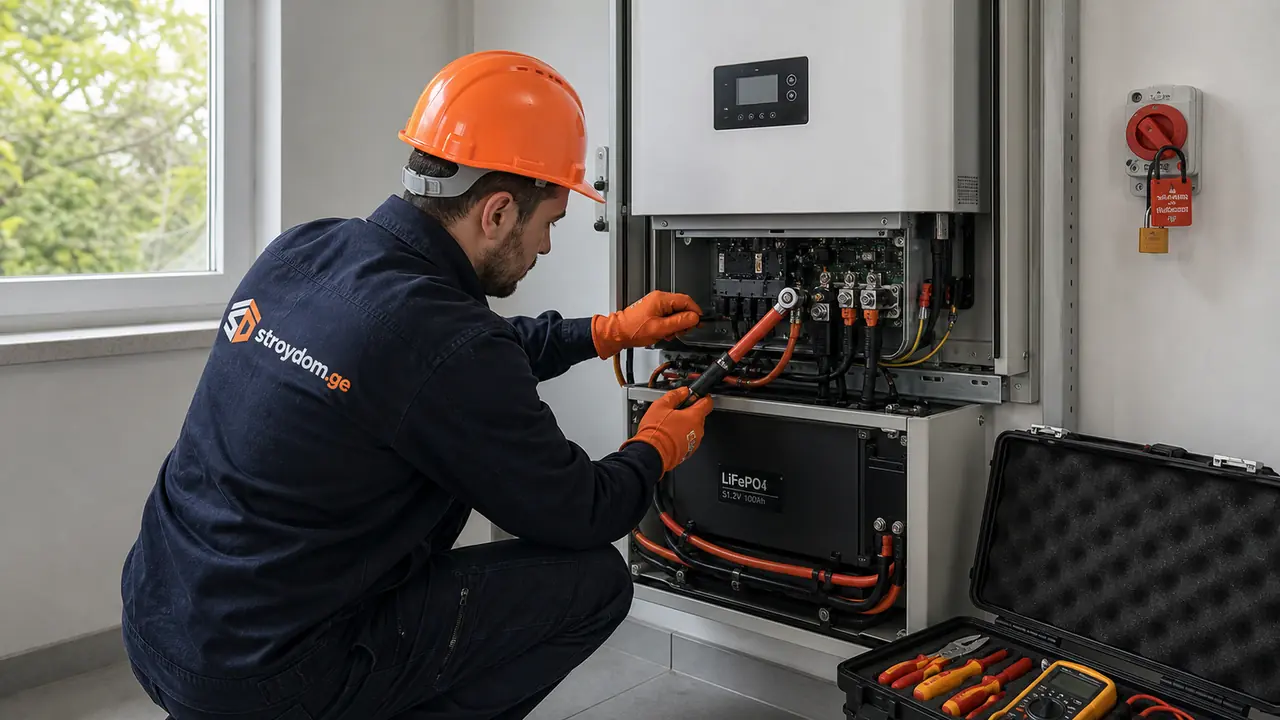
Installation of the AHU with heat exchanger, filters and controls.
Ducting
Concealed runs in ceilings and shafts, attenuators, diffusers.
Air conditioning
Multi-split and ducted units, refrigerant lines, condensate with falls.
Balancing and start-up
Flow rates set per room, measurements taken, owner instruction.
What is ventilation and air conditioning and why is it needed?
Ventilation decides what you breathe every night; air conditioning decides whether the house is liveable at +40 °C. Both are concealed systems: ducts, refrigerant lines and condensate are installed before finishes and cannot be rerouted afterwards. So we calculate air change and draw the routes together with the electrics and plumbing, not after them.
What stages does ventilation and air conditioning consist of?
Each stage runs only after the previous one is accepted — so hidden works are never "closed" before inspection, and a mistake never has to be hunted for through screed and plaster.
- 1
Calculation
Room air change rates and cooling loads for equipment selection.
- 2
Design
Duct and line layout, unit positions, attenuators, condensate points.
- 3
Coordination with finishes
Ceiling heights, bulkheads, grille and indoor unit positions.
- 4
First fix
Ducts, refrigerant lines, condensate and power before plastering.
- 5
Pressure testing
Refrigerant lines tested with nitrogen and evacuated before start-up.
- 6
Equipment
AHU, outdoor and indoor units, extract fans.
- 7
Balancing
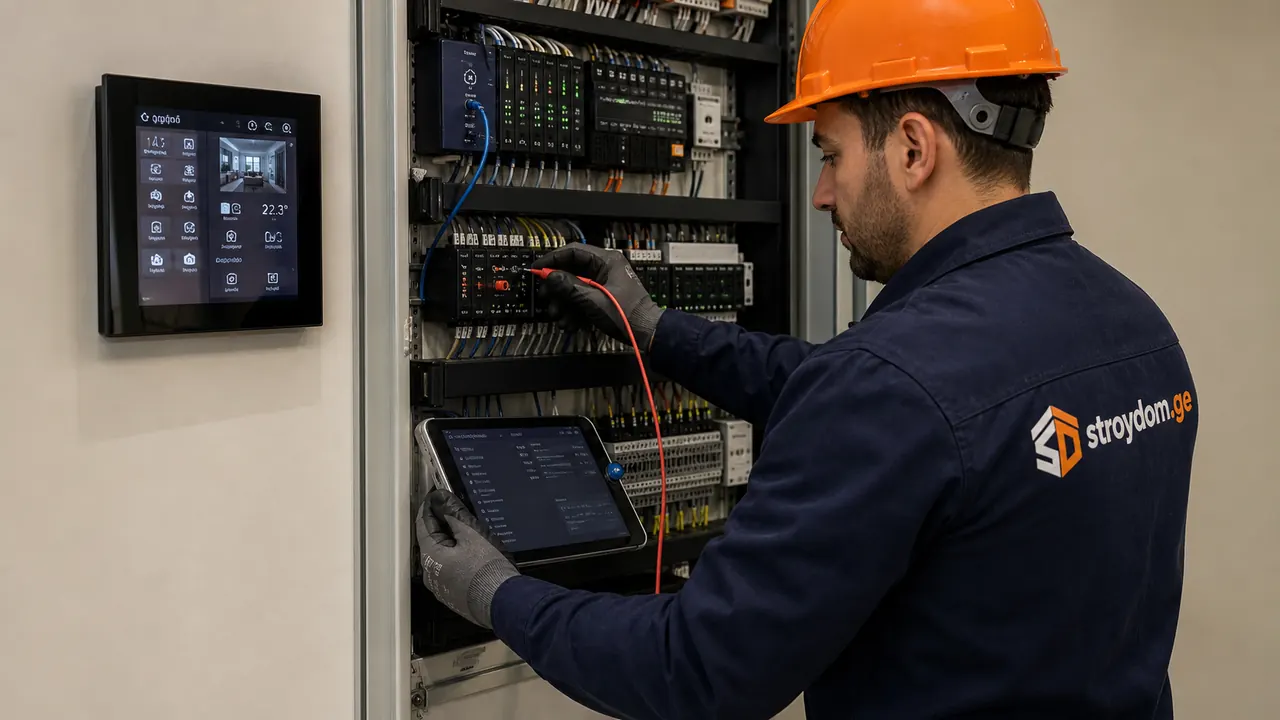
Flow rates set per room with measurement, diffusers adjusted.
- 8
Handover
Commissioning, measurements, instruction and a filter service schedule.
How does stroydom.ge control quality on site?
How we work on site — materials, equipment, tolerances, documentation and acceptance of hidden works.
Test before closing up
Refrigerant lines hold pressure for 24 hours: leaks are found before plastering, not after.
Condensate falls
Every metre of condensate line is flood-tested, because a sag means a leak within a year.
Noise controlled
Attenuators and correct duct sizes: ventilation should not be audible in a bedroom.
Service access
Access hatches to filters and components are designed into the ceiling, not improvised later.
Documents
Equipment data sheets, pressure test record, measured flow rates.
What should be accounted for in Tbilisi and Georgia?
What we account for here: seismic intensity 8 (MSK-64), hot summers and damp winters, steep terrain, older stock with timber floors and worn city networks.
Tbilisi heat
Outdoor units lose capacity in direct sun: we place them in shade or under a hood with clearance for airflow.
Older buildings
Shared shafts are often blocked or altered by neighbours. We check the draught before design and add a dedicated duct if needed.
Dust and pollen
Tbilisi summers are dusty: filters above the basic class and a clear replacement schedule.
The coast
Humid air in Batumi and Kobuleti demands attention to condensate and corrosion-resistant outdoor units.
Ceiling height
Ducts take 15–25 cm. That is designed into the ceiling before finishes, not resolved on site.
How much does it cost and how long does it take?
Indicative price ranges in lari (₾) for standard conditions. The final estimate is fixed after measurements and specification approval.
| Item | What is included and the price |
|---|---|
| Guide prices (Tbilisi, before survey) | The figures below are a working guide for budgeting. The firm estimate follows a site visit and survey: scope, access and substrate condition all move the price. |
| Heat recovery unit | System with heat recovery for a 150 m² house: 8000–16000 GEL including equipment, installation and commissioning. |
| Ducting | Installation with attenuators and diffusers: 45–80 GEL per linear metre. |
| Air conditioning | Wall split installation: 350–650 GEL; ducted unit: 1400–2600 GEL (excluding equipment). |
| Bathroom extract | Inline fan with non-return valve and connection: 250–450 GEL per point. |
| Maintenance | Filter changes and seasonal servicing: from 150 GEL per visit; commercial buildings under agreement. |
| How we price | By system: equipment, ducting and lines per linear metre, installation and commissioning as separate items. |
| What drives the price | Area and number of rooms, system type (split, multi-split, ducted, AHU with heat recovery), difficulty of the routes. |
| Maintenance | Filter changes and seasonal servicing are separate, including under contract for commercial buildings. |
| Within a renovation | First-fix routes belong to the services stage and are priced with the electrics and plumbing. |
| Terms | Fixed estimate in GEL, staged payments, installation warranty in the contract; equipment carries the manufacturer warranty. |
Updated:
Ready to estimate?
Leave a request — engineer site visit, measurement and a preliminary estimate for "ventilation and air conditioning" are free.

Planning to build a house?
Start with a free consultation about your plot, floor area and budget. If you are still looking for land, tell us about a plot you are considering.
We will call within an hour, 24/7. You do not need drawings for the first conversation.
By submitting the form you agree to personal data processing. Privacy Policy
Frequently asked questions — Ventilation and air conditioning
Why ventilate when you can open a window?
A window gives uncontrolled air: cold and noise in winter, heat and dust in summer, and in Tbilisi traffic fumes too. A supply and extract unit delivers filtered air continuously in the right volume, and a heat exchanger returns 70–90% of the heat from the outgoing air, so you do not choose between fresh air and the heating bill. In a flat with sealed windows and no mechanical ventilation, humidity and CO₂ climb within a couple of hours.
What is heat recovery and does it pay off?
A heat exchanger uses the outgoing warm air to preheat the incoming cold air without mixing them. Heating savings depend on area, usage and climate; in Tbilisi winters the payback is slower than in northern countries, but recovery also solves a second problem: no draughts and no cold incoming air. That is why it is fitted even where only comfort is counted.
Why does the bathroom extract not pull?
Three reasons. First, a blocked or altered shared shaft in older buildings: hold a sheet of paper to the grille to check. Second, sealed windows and tight doors: there is no make-up air, so extract cannot work. Third, back-draught when neighbours have fitted a powerful fan into the shared duct. It is solved with make-up air (trickle vents, a gap under the door) and, if needed, a non-return valve.
Where does air conditioning condensate go?
Into the drainage through a dry trap, or outside, with a fall of at least 1 cm per metre. The most common renovation mistake is a condensate pipe that sags or has no fall: water stands, fouls up, and one day appears on the ceiling below. We install condensate routes before finishes and flood-test them.
When should refrigerant lines be installed?
Before final finishes, together with the electrics and plumbing. Refrigerant lines, condensate and power are built into walls and ceilings, with indoor units hung after decoration. If lines are not provided, the remaining option is surface trunking, which is workable but looks worse and limits furniture layouts.
Is one air conditioner enough for a house?
Not for comfort: a single split cools its own room, and air moves poorly through doors. A house needs either a multi-split with units per zone or a ducted system. In Tbilisi at +40 °C, undersized capacity means the unit runs continuously, makes noise and never reaches the set temperature.