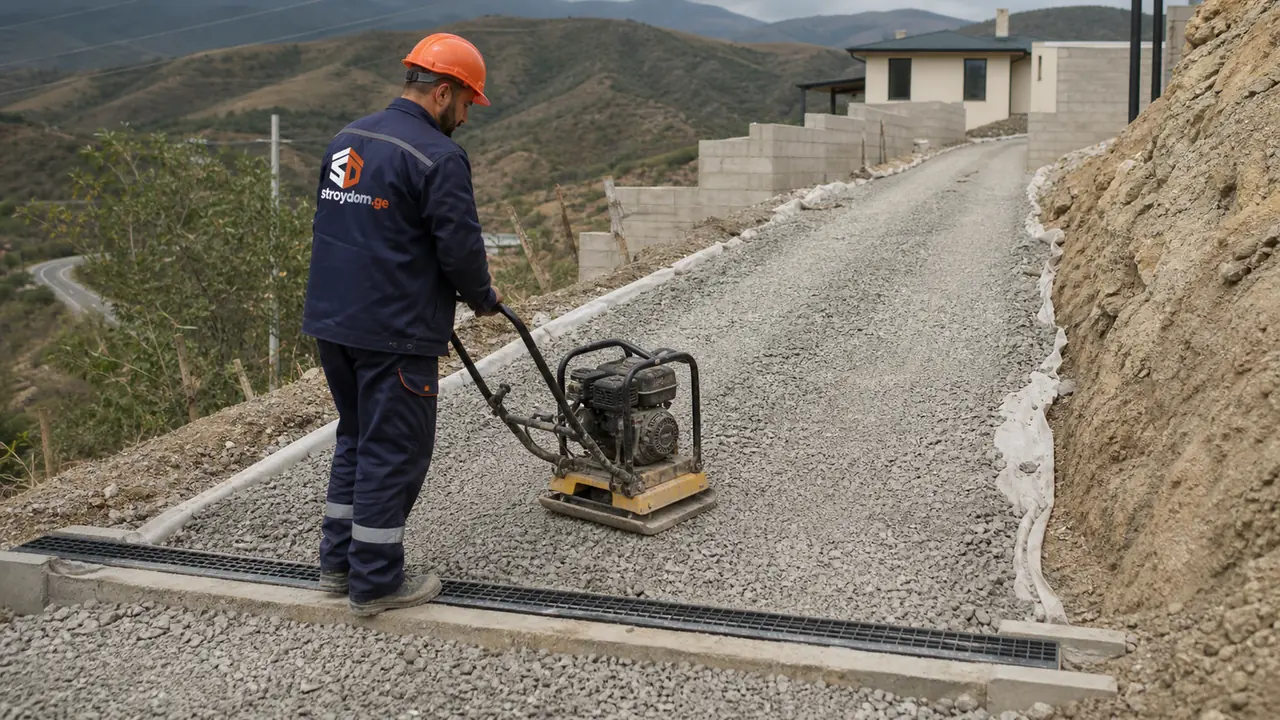
Access roads and hardstanding
An access road on a plot in Tbilisi and the suburbs is priced by square metre at stroydom.ge: a sub-base with formation, geotextile and compacted stone costs 55–110 ₾ per m². Surfacing: a reinforced concrete slab with movement joints 110–190 ₾ per m², block paving with kerbs 90–170 ₾ per m², gravel with edging 35–70 ₾ per m². Drainage (channels, ditches and pipes under the road) costs 90–190 ₾ per linear metre; slope stabilisation is a separate item. The road is part of a full build project.
We build access roads, turning areas and parking on plots in Tbilisi and the suburbs (Tskneti, Kojori, Okrokana, Digomi): gradients and turning radii sized for concrete mixers and tippers, geotextile-separated crushed stone sub-base, surfacing in concrete, block paving or gravel, cross-fall drainage with channels, and stabilised verges on sloping ground.
Available as a separate order from 1,000 GEL
We take this work as a standalone order from 1,000 GEL, or as part of a turnkey house project. Inside a house project one contractor answers for the whole chain of work: one estimate and one warranty.
About the work
How does stroydom.ge deliver access roads and hardstanding?
Year-round access to the plot: sub-base, surface, drainage.
What is included in access roads and hardstanding?
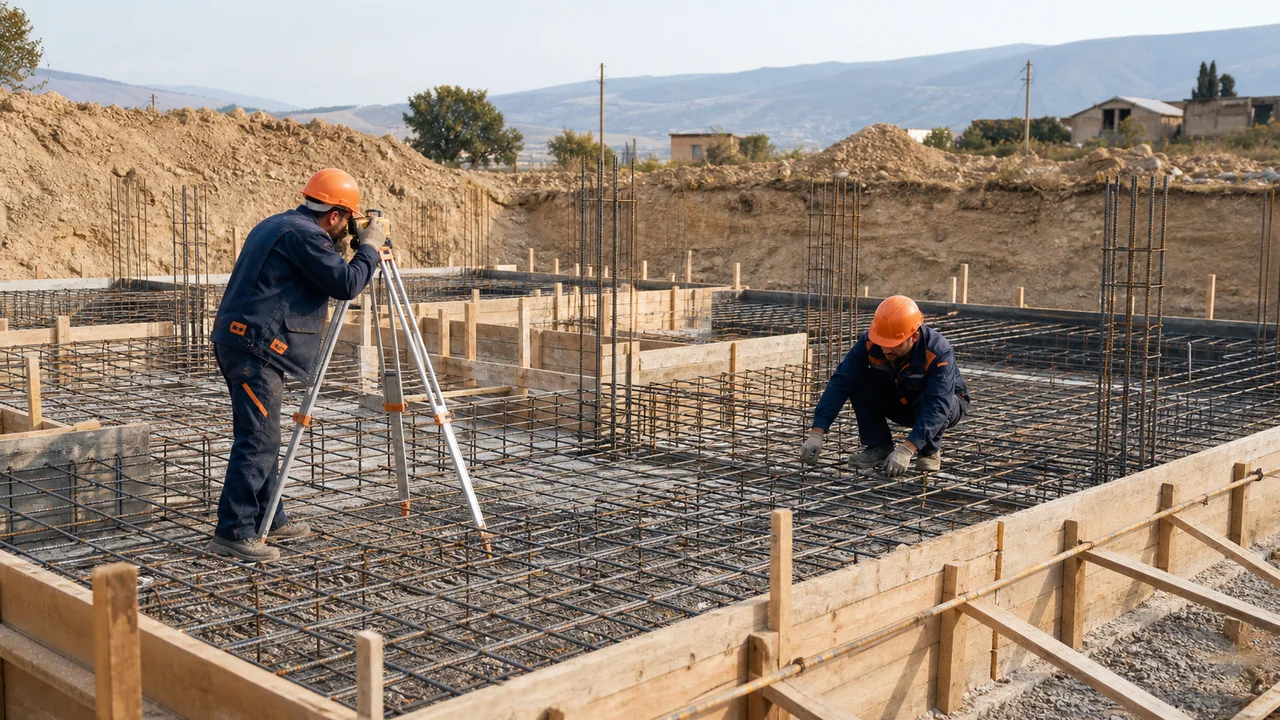
Setting out
Longitudinal and cross gradients, turning radii for long vehicles and mixers, drainage points.
Earthworks
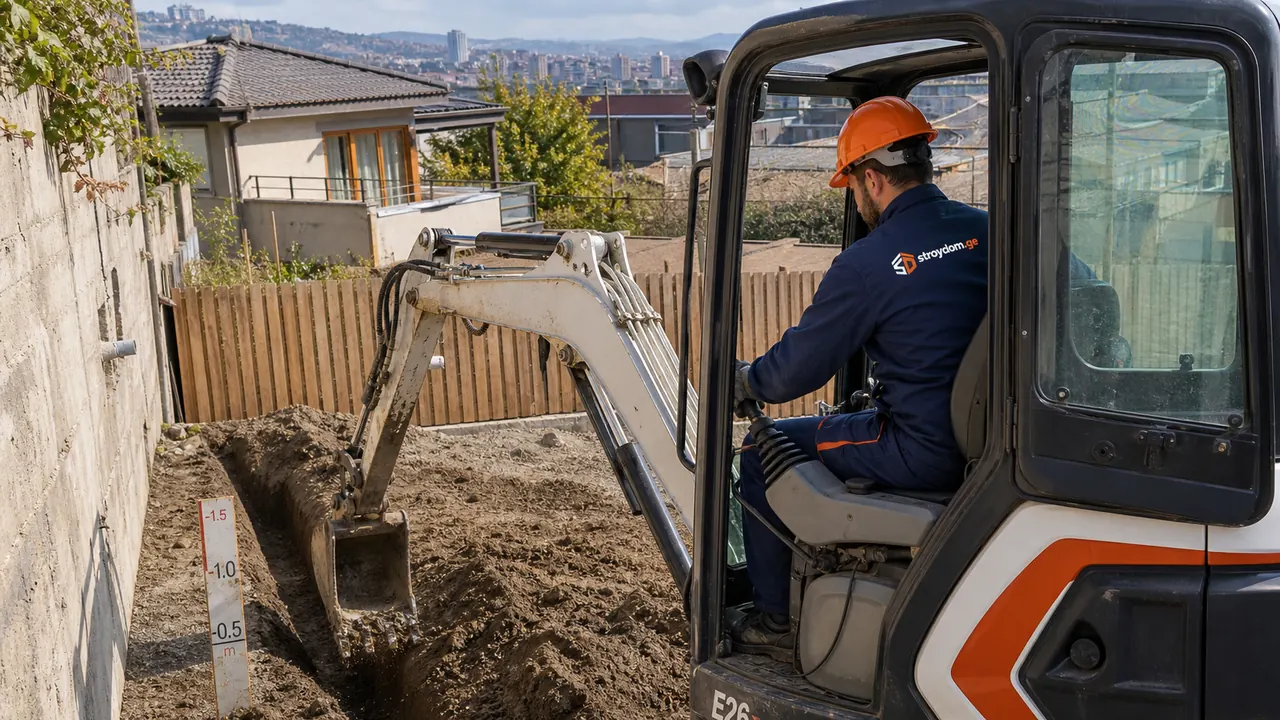
Topsoil stripped, formation excavated, graded and compacted.
Sub-base
Geotextile and crushed stone laid in compacted layers for the design loading.
Surfacing
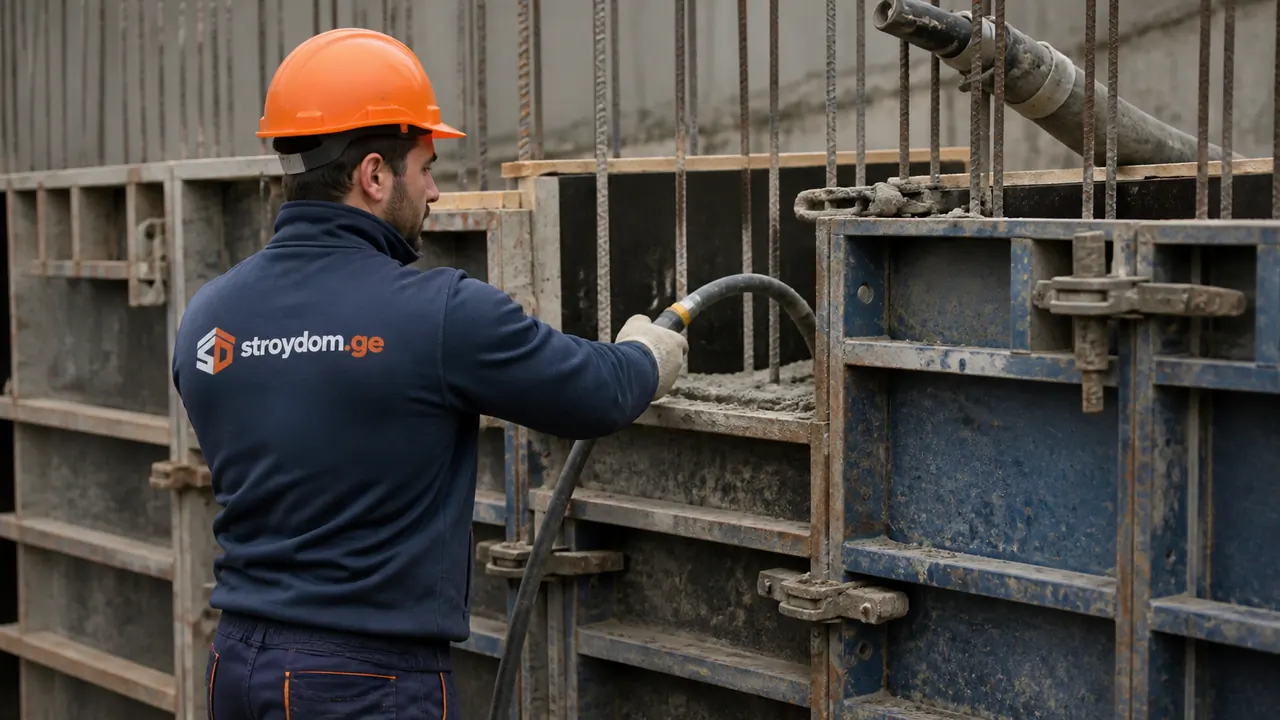
Reinforced concrete, block paving or gravel with edging and kerbs.
Drainage
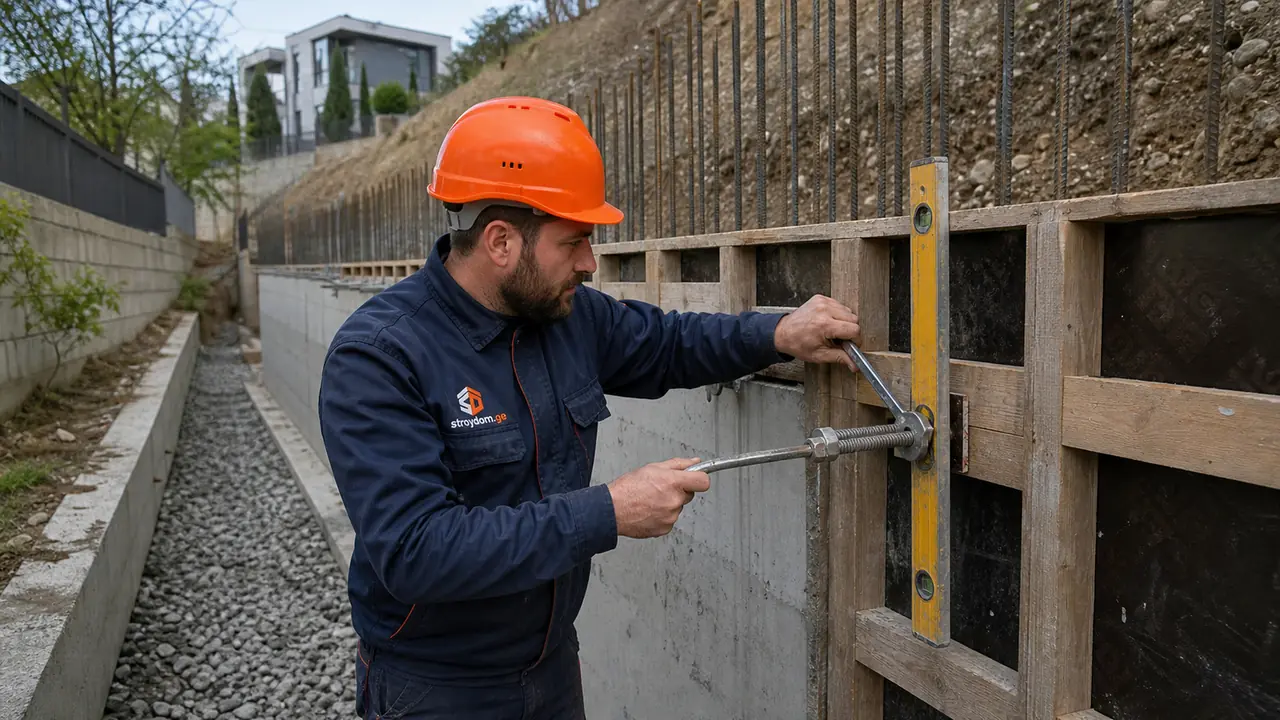
Cross channels, ditches, water taken away from the house and retaining walls.
What is access roads and hardstanding and why is it needed?
On Tbilisi plots the access is not landscaping but a precondition for building at all: if a mixer cannot reach the site, concrete has to be pumped or barrowed and every concrete stage costs more. The road also fixes where the turning area sits, where parking goes and where water off the slope ends up. So it is set out together with the position of the house and the retaining walls, before excavation for the foundations.
What stages does access roads and hardstanding consist of?
Each stage runs only after the previous one is accepted — so hidden works are never "closed" before inspection, and a mistake never has to be hunted for through screed and plaster.
- 1
Survey
Level difference, junction point, soil type, available width, neighbouring structures.
- 2
Setting out
Longitudinal and cross gradients, radii, passing places, turning area.
- 3
Formation and sub-base
Excavation, geotextile, crushed stone in compacted layers for the design loading.
- 4
Drainage
Ditches, cross channels, pipes under the road, discharge away from house and walls.
- 5
Surfacing
Reinforced concrete with joints, block paving on a bedding layer, or gravel with edging.
- 6
Verges and handover
Slopes stabilised, kerbs, junctions graded, access proven with a real vehicle.
How does stroydom.ge control quality on site?
How we work on site — materials, equipment, tolerances, documentation and acceptance of hidden works.
Proven by driving it
Radii and gradients are checked by actually bringing a mixer in, not only on the drawing.
Compacted in layers
Stone is compacted layer by layer: one deep tip settles in the first winter.
Water across, not along
Cross-fall and channels are mandatory, because water running along the road scours the sub-base and heads for the house.
Joints in concrete
Movement joints are cut on time, otherwise the slab cracks where it likes.
What should be accounted for in Tbilisi and Georgia?
What we account for here: seismic intensity 8 (MSK-64), hot summers and damp winters, steep terrain, older stock with timber floors and worn city networks.
Steep slopes
In Tskneti and Kojori the gradient often forces a switchback route supported by a retaining wall.
Storms
A Tbilisi downpour strips gravel off a slope within an hour: on climbs we use concrete and channels.
Narrow streets
The turning radius onto the public road is limited by neighbouring fences and is checked before forming the junction.
Mountain winters
In Gudauri and Bakuriani a textured surface and somewhere to push snow both matter.
How much does it cost and how long does it take?
Indicative price ranges in lari (₾) for standard conditions. The final estimate is fixed after measurements and specification approval.
| Item | What is included and the price |
|---|---|
| Guide prices (Tbilisi, before survey) | The figures below are a guide. The final estimate depends on length, gradient, excavation volume and surface type. |
| Road sub-base | Formation, geotextile and compacted stone: 55–110 ₾ per square metre. |
| Concrete surface | Reinforced slab with movement joints: 110–190 ₾ per square metre. |
| Block paving | Laid on a bedding layer with kerbs: 90–170 ₾ per square metre. |
| Gravel surface | Wearing course with edging: 35–70 ₾ per square metre. |
| Drainage | Channels, ditches and pipes under the road: 90–190 ₾ per linear metre. |
| How we price | By square metre of sub-base and surfacing; drainage and slope stabilisation as separate items. |
Updated:
Ready to estimate?
Leave a request — engineer site visit, measurement and a preliminary estimate for "access roads and hardstanding" are free.

Planning to build a house?
Start with a free consultation about your plot, floor area and budget. If you are still looking for land, tell us about a plot you are considering.
We will call within an hour, 24/7. You do not need drawings for the first conversation.
By submitting the form you agree to personal data processing. Privacy Policy
Frequently asked questions — Access roads and hardstanding
Why build the access before construction starts?
Because every vehicle comes in on it: mixers with concrete, tippers with spoil, a crane, a lorry-mounted loader with materials. A road laid as a temporary measure breaks up in the first month of concrete works and has to be rebuilt anyway, along with the lawn ruined at its edges. The right order is a permanent sub-base straight away, with the final surface once heavy plant has left the site.
What gradient is acceptable?
For cars, up to 10–12% is comfortable; beyond that traction becomes a problem on a wet winter surface. Mixers and tippers need a flatter profile and larger turning radii, and on a long climb, passing places. On Tbilisi slopes the road usually has to run diagonally with one side supported by a retaining wall to keep the gradient sensible.
Concrete, block paving or gravel?
Concrete is the most reliable on a slope and under heavy plant, but needs reinforcement, movement joints and a textured surface or it becomes slippery. Block paving looks better and can be lifted for repairs, but opens up at the joints on steep climbs under heavy use. Gravel is cheapest but needs topping up and washes off a slope in storms. A combination is often the sensible answer.
Does the junction with a public road need approval?
A junction with a municipal or shared road affects both the city and the neighbours: sight lines matter, so does drainage (which must not be directed onto someone else’s land), and so do the boundaries. We check this before any earthworks and form the junction so water goes into your own ditch; otherwise a dispute follows the first heavy rain.